Welcome Home
First Impressions: Warm, Simple, and Ready for Real Fabric
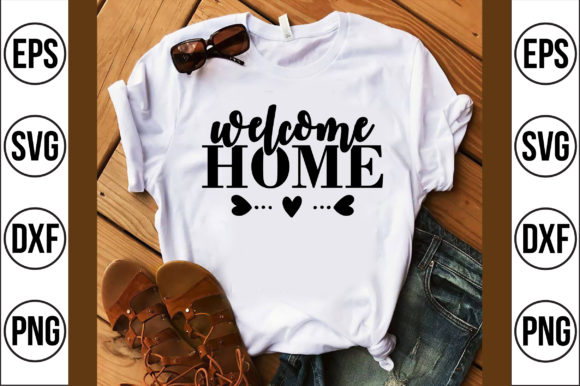
When I opened the Welcome Home design for the first time, I didn’t see a generic greeting—I saw a quiet invitation. The layout is clean and centered, with gentle curves in the letterforms and subtle spacing that breathes without feeling sparse. It’s not ornate, but it’s not flat either: there’s soft rhythm in the baseline, a slight swell to the “W” and “H,” and just enough weight to hold up in satin stitch without collapsing on thin fabric. As a designer who’s stitched hundreds of phrases onto baby onesies, tote bags, and boutique aprons, I immediately pictured this on a natural linen tea towel—soft, uncluttered, and full of intention.
Where It Shines: Everyday Handmade Products With Quiet Confidence
Welcome Home isn’t built for flash—it’s built for presence. I recently used it on a custom embroidered cotton canvas tote for a local home goods shop, pairing it with tonal ecru thread on oat-colored fabric. The result? Customers paused mid-aisle. Not because it shouted, but because it felt *meant*—like something you’d stitch for a friend moving into their first apartment or hang above a nursery door. It works beautifully on sweatshirt embroidery (especially mid-chest placement), baby embroidery (think onesie backs or bibs), and pillow covers where subtlety reads as care. As a T-Shirt Designs asset, it avoids the trap of over-detail: no tiny serifs, no fragile loops, no overlapping letters that risk stitching errors on stretchy knits.
Real Project Test: A Linen Kitchen Towel Series
I ran Welcome Home through a full production test on heavyweight linen towels—medium hoop size, tear-away + light cutaway stabilizer, 40-weight polyester thread. The fill stitch held cleanly across the “O” and “M,” and the running stitch outlines added definition without harshness. No puckering. No skipped stitches. On dark fabric, I switched to cream thread and confirmed it retained legibility—even under kitchen lighting. That’s rare for a phrase so minimal. It doesn’t need embellishment; its strength is in restraint.
Where to Use It Thoughtfully
- Small hoop sizes: It scales well down to 3.5”, but avoid going smaller—the “A” and “E” lose clarity below 3”. Always check the SVG or DXF outline before resizing.
- Textured fabrics: Works on waffle weave towels and terry cloth, but reduce stitch density slightly and add a topping stabilizer to prevent thread sinking.
- Stretchy or thin fabric: Not ideal for lightweight jersey tees without proper backing. Use a cutaway stabilizer and consider simplifying the design if stitching on infant bodysuits.
- Curved surfaces: Cap fronts are possible—but only with a low-profile hoop and careful digitizing adjustments. I’d recommend using Welcome Home on flat or gently rounded items like aprons, tote bags, or pillow covers first.
- Dense areas & corners: The design has no tight interior corners or nested fills, which means fewer thread breaks and cleaner trims. That’s a win for commercial embroidery workflows.
What It Adds to Your Finished Product—Beyond the Stitch
Customers don’t buy letters—they buy feeling. Welcome Home delivers warmth without cliché, professionalism without stiffness. When used on personalized gifts or small shop merchandise, it elevates perceived value: a $28 embroidered tea towel feels like a curated object, not a craft fair afterthought. For Etsy sellers, it pairs well with neutral mockups and builds brand consistency across listings—especially when used alongside complementary designs like “Gather,” “Good Morning,” or simple botanical motifs. As a Graphics file, its clean vector foundation (SVG, EPS, DXF) makes it easy to adapt for printable mockups or digital product previews without pixelation.
Practical Embroidery Designer Notes
Before stitching Welcome Home on your next project, do these five things:
- Test it on scrap fabric matching your final substrate—especially if using textured, dark, or stretchy materials.
- Check thread color contrast in both black-and-white and color mockups. Light thread on light fabric can vanish; dark thread on dark needs extra stitch definition.
- Review stitch density in your embroidery software—if it feels heavy for your fabric, lighten fill areas slightly.
- Confirm hoop size compatibility. While the design fits standard 4x4 hoops comfortably, verify your machine’s max dimensions if using multi-position hooping.
- Inspect small details at 200% zoom: look for stray anchor points, inconsistent line weights, or gaps between letters that could cause registration issues.
And one more thing: since this is a digital embroidery file—not an applique design or pre-digitized machine embroidery design—you’ll need to digitize it yourself or use compatible software. If you’re selling finished products, double-check the license terms included with your download. Most Graphics files like this allow commercial use, but never assume.
Final Thought: A Design That Earns Its Place
Welcome Home doesn’t try to be everything. It’s not flashy enough for festival merch, too gentle for athletic apparel, and too refined for kitschy holiday embroidery. But in the spaces where handmade product meets daily life—on a child’s quilt label, a boutique coffee shop apron, a wedding guest towel set, or a small shop’s signature tote—it lands with sincerity. It’s the kind of design that makes customers say, “I want one of those,” not because it’s loud, but because it feels like it belongs. For craft business owners, Etsy sellers, and embroidery designers building a library of trusted assets, Welcome Home earns its spot—not as filler, but as foundation.