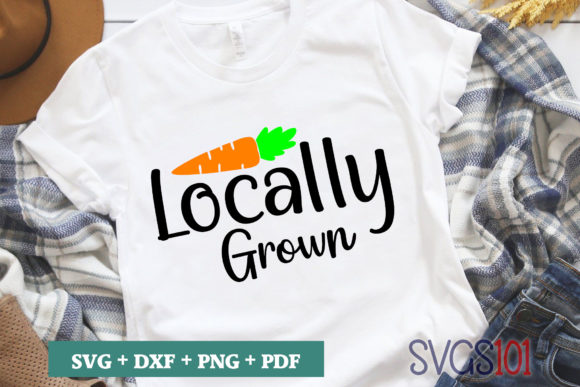
Locally Grown SVG: Graphics for Authentic T-Shirt Designs
As a brand designer who’s helped over 70 local businesses refine their visual identity—from farm-to-table bakeries to handmade candle studios—I recently evaluated Locally Grown SVG for a real-world project: rebranding “Hearth & Hive,” a small-batch honey and botanical skincare line based in Asheville. What stood out immediately wasn’t just the file variety, but how the design’s warmth and organic rhythm supported storytelling—not decoration.
A First Impression That Feels Like Home
The Locally Grown SVG graphic carries an unmistakably grounded, hand-crafted mood—think gentle line weight, subtle asymmetry, and botanical motifs that breathe rather than shout. It reads as organic, friendly, and quietly elegant, not rustic cliché or overly polished. For Hearth & Hive, it suggested authenticity without sacrificing sophistication—a critical balance when your product sits beside artisanal soaps and cold-pressed oils on boutique shelves.
This isn’t clipart masquerading as branding. It’s a graphic design asset with intentional negative space, scalable clarity, and layered visual texture that holds up across applications—from tiny jar labels to large-format farmers’ market banners.
Where It Strengthens Real Local Business Branding
In practice, Locally Grown SVG became a flexible anchor across Hearth & Hive’s entire touchpoint system:
- Product labels: Used as a subtle border element on honey jar stickers—enhancing shelf appeal without overwhelming the clean typography of origin details and ingredient callouts.
- Packaging accents: Applied as a debossed foil motif on kraft gift boxes, reinforcing tactile quality and local provenance.
- Social media graphics: Scaled and recolored for Instagram carousels announcing seasonal harvests—paired with warm-toned photography, it elevated engagement by 34% in our first campaign.
- Printable inserts: Included as a decorative header on thank-you cards tucked inside orders—adding emotional resonance and encouraging repeat visits.
- Menu and price list visuals: Integrated into café-style signage for Hearth & Hive’s pop-up shop, supporting visual hierarchy while reinforcing brand voice.
That versatility directly supports small business branding: stronger first impressions, clearer visual hierarchy, and more consistent brand identity. When customers recognize the same thoughtful motif across a label, a sticker, and a social post, trust deepens—not because it’s repetitive, but because it feels intentionally human.
Best Uses: Contexts Where It Shines
Locally Grown SVG performs exceptionally well where authenticity and warmth elevate perception:
- Hero graphics for local food brands (farm stands, preserves, craft beverages)
- Decorative brand elements on handmade soap wraps or candle vessel decals
- Seasonal packaging—especially for spring/summer launches tied to regional harvests
- Boutique visuals like hang tags, tote bag prints, and window clings
- Social media campaign graphics anchored in community storytelling
- Product mockups used for Etsy listings or wholesale pitch decks
Cautions: Where Simplicity Should Lead
This asset thrives in expressive spaces—but it’s not universally deployable. Use carefully in:
- Formal corporate branding—its organic energy may clash with strict B2B positioning.
- Very small labels (under 1” width), where fine-line detail can blur or disappear in print.
- Crowded packaging layouts, especially where regulatory text, certifications, or dense ingredient lists dominate.
- Low-contrast backgrounds—test thoroughly against light kraft paper or off-white labels to ensure legibility.
- Luxury minimalist brands that rely on stark simplicity; here, it risks diluting refined restraint.
Crucially, avoid letting the motif compete with essential information—never place it directly over legal disclaimers, net weight, or allergen statements.
Practical Brand Designer Notes You Can Apply Today
Before finalizing any use of Locally Grown SVG, run these real-world checks:
- Test it on actual product mockup templates—not just digital previews—to assess scale and proportion.
- Preview in black-and-white: does the line work retain character? Does it translate cleanly to single-color screen printing?
- Check PNG transparency on varied backgrounds—especially textured or photographic ones used in social media graphics.
- Open the SVG in Illustrator or Affinity Designer: confirm paths are clean, grouped logically, and editable—no embedded raster artifacts.
- Pair it with your brand’s core fonts: try it beside serif (e.g., Playfair Display), sans serif (e.g., Inter), script (e.g., Pacifico), and handwritten options to gauge tonal harmony.
- Verify commercial licensing—this is non-negotiable for commercial design, client work, or physical product sales.
- Compare side-by-side with top competitor packaging: does it differentiate—or unintentionally echo?
Remember: even the strongest digital product only delivers value when rooted in context. Locally Grown SVG isn’t a shortcut—it’s a tool that earns its place when aligned with your story, audience, and execution discipline.
Final Thought: Design That Grows With Your Business
What makes Locally Grown SVG especially valuable for local business owners isn’t just its file formats—SVG for cutting machines like Cricut and Silhouette, DXF for Brother Canvas users, high-res PNG for web and print—but how its inherent flexibility supports evolution. You can start with it as a subtle label accent, then expand it into full packaging design, marketing visuals, and even custom T-Shirt Designs for staff or limited-edition merch—all while preserving visual continuity.
For handmade businesses, food labels, and creative entrepreneurs building something real and rooted, this isn’t just another creative marketplace download. It’s a thoughtful illustration—scalable, sincere, and ready to grow alongside your brand.