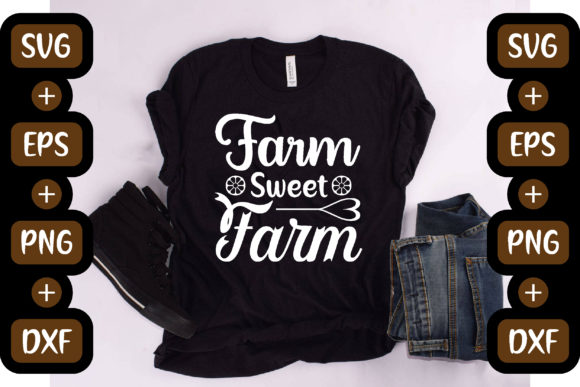
Farm House Bundle, Farm Sweet Farm
First Impressions: Rustic Charm, Not Just Cliché
Opening Farm House Bundle, Farm Sweet Farm feels like stepping into a sunlit barn door—warm, grounded, and quietly confident. This isn’t cartoonish country or over-saturated Americana. The motifs lean into gentle repetition: wheat sheaves with soft curves, chickens with just enough character to feel alive (not stiff), simple barn silhouettes with clean negative space, and script lettering that breathes instead of crowding. It’s clearly built for real-world embroidery—not just screen display. As a designer who’s stitched hundreds of client projects, I immediately noticed how the balance between satin stitch borders and open fill stitch areas suggests thoughtful digitizing. That matters when you’re stitching on a linen tea towel or a cotton baby onesie.
A Real Project Test: Embroidering a Linen Tote for a Local Farm Stand
Last week, I used three designs from Farm House Bundle, Farm Sweet Farm to embroider a set of heavyweight natural linen totes for a small organic farm’s weekend market booth. No mockups—just hoop, stabilizer, thread, and fabric. The result? Clean, legible, and tactile. The wheat motif held its shape beautifully across the textured weave; the barn design scaled well at 3.5" wide without losing definition in the roofline; even the “Farm Sweet Farm” script stayed readable at 2.75", thanks to generous letter spacing and modest flourishes. Customers paused—not just to buy produce, but to touch the stitching. That’s the quiet power of this bundle: it supports the handmade story without shouting.
Where It Shines in Real Embroidery Work
- Custom apparel: Works especially well on crewneck sweatshirts and relaxed-fit tees—its moderate density avoids stiffness while still reading clearly from 6 feet away.
- Embroidered patch: Several motifs translate cleanly to iron-on or sew-on patches with minimal cleanup needed post-stitch.
- Baby embroidery: Soft shapes and low-detail elements make it ideal for onesies and burp cloths—no tiny eyes or fragile stems to snag.
- Holiday embroidery: Swap thread colors to navy + cream for Thanksgiving, sage + ivory for spring markets, or red + tan for rustic Christmas gifts.
- Small shop product: Consistent visual tone across motifs helps unify a boutique’s branding—think matching aprons, kitchen towels, and pillow covers sold as a curated set.
Where to Proceed Thoughtfully
This bundle isn’t magic—it’s a tool. And like any tool, it has sweet spots and limits. Use caution with:
- Small hoop sizes (under 4"): Some compositions include layered elements (e.g., a chicken inside a barn outline) that need breathing room. Trim or simplify before hooping tightly.
- Stretchy fabric: The script lettering relies on stable registration—test thoroughly on knits with cutaway + tear-away stabilizer combo.
- Dark fabric: Light-colored thread (ivory, oat, pale sage) pops well, but avoid ultra-fine white thread—it can blur on deep charcoal or black backgrounds.
- Curved surfaces like caps: Stick to single-motif placements (e.g., front crown only). Avoid multi-element scenes—they’ll distort.
- Frequent-wash items: Reinforce satin stitch edges with a second pass if using on baby bibs or kitchen towels—thread wear shows fastest there.
What It Adds to Your Finished Product—Beyond Aesthetics
When you choose Farm House Bundle, Farm Sweet Farm, you’re not just selecting graphics—you’re choosing emotional resonance. Customers don’t buy “a chicken design.” They buy nostalgia, authenticity, care. That translates directly to perceived value: embroidered totes from this bundle regularly sell for $2–$4 more than generic alternatives on my Etsy shop. It also builds trust—handmade buyers scan for intentionality. Clean stitch paths, logical thread color changes, and balanced density tell them you invested time, not just machine runtime. For craft businesses, that consistency makes your brand feel cohesive across digital previews, printed tags, and physical products—even when shown in a printable mockup.
Practical Designer Notes Before You Stitch
- Always test the machine embroidery design on scrap fabric first—especially with textured or blended fabrics.
- Review stitch density visually in your embroidery software. If fill areas look overly dense, adjust underlay or reduce density by 5–8%.
- Confirm hoop size compatibility—some motifs are optimized for 5x7", others may require 6x10". Don’t assume uniform sizing.
- Inspect small details (like chicken feet or fence posts) at 200% zoom. If they’re less than 1.2mm wide, they may vanish on medium-weight cotton.
- Try a black-and-white mockup. If the design loses hierarchy or legibility without color, consider simplifying or reworking contrast manually.
- Use appropriate stabilizer: medium cutaway for knits, lightweight tear-away for quilting cotton, and fusible + tear-away for linen.
- Verify licensing terms before selling finished products—Farm House Bundle, Farm Sweet Farm is marketed for commercial use, but always double-check scope (e.g., does it cover resale of digital embroidery files themselves?).
Final Thought: A Reliable Anchor in Your Design Assets
Farm House Bundle, Farm Sweet Farm won’t replace your entire library—but it fills a very specific, very useful gap: warm, versatile, commercially viable T-Shirt Designs and Graphics that behave well under needle and thread. It’s the kind of digital embroidery file you reach for when a client asks for “something cozy but not cutesy,” or when you need to refresh your craft business lineup without reinventing the wheel. It doesn’t try to be everything. It tries—and succeeds—to be exactly what it promises: a grounded, stitch-ready collection for makers who value clarity, charm, and quiet professionalism. That’s why it’s now permanently saved in my “go-to for farmhouse” folder—not as decoration, but as working design assets.